Metal Shed Removal in Dayton, OH
A lightweight metal shed can still be awkward to remove. Large panels, corroded fasteners, sharp edges, and anchors all matter.
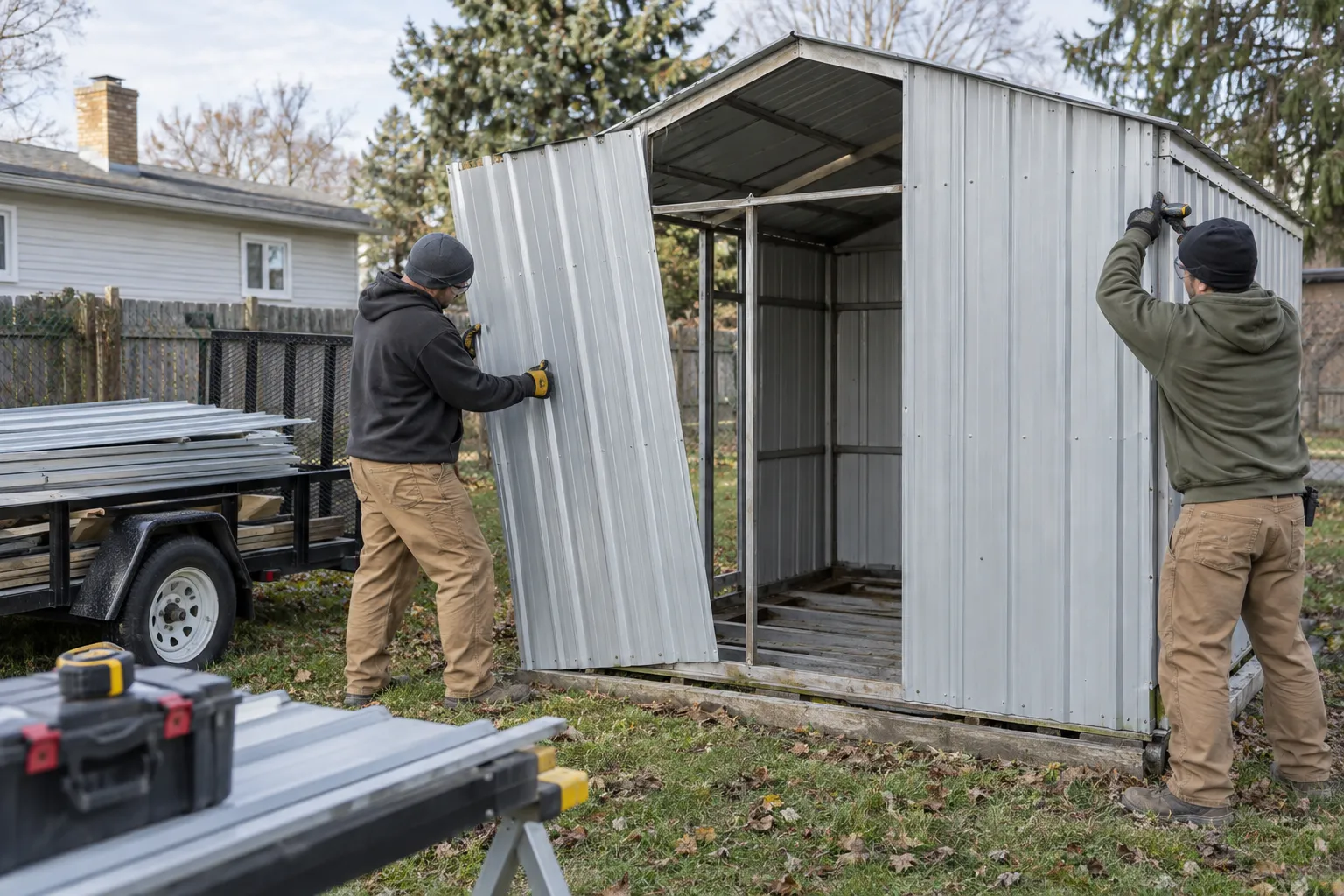

The plan should keep the frame stable while panels and doors are removed, then separate the base or anchors only when included.
What the conversation should cover
- Review of panel, frame, door, and anchor condition
- Controlled unfastening or sectioning
- Stacking sized to the access route
- Loading approved metal shed components
- Pickup of loose screws and small fragments in the work area
Prepare without starting the risky work
- Empty shelves and floor space.
- Photograph each wall, door track, roof, interior frame, and base.
- Do not handle rusted or wind-damaged panels without suitable protection.
- Note anchors and whether the floor platform is separate.
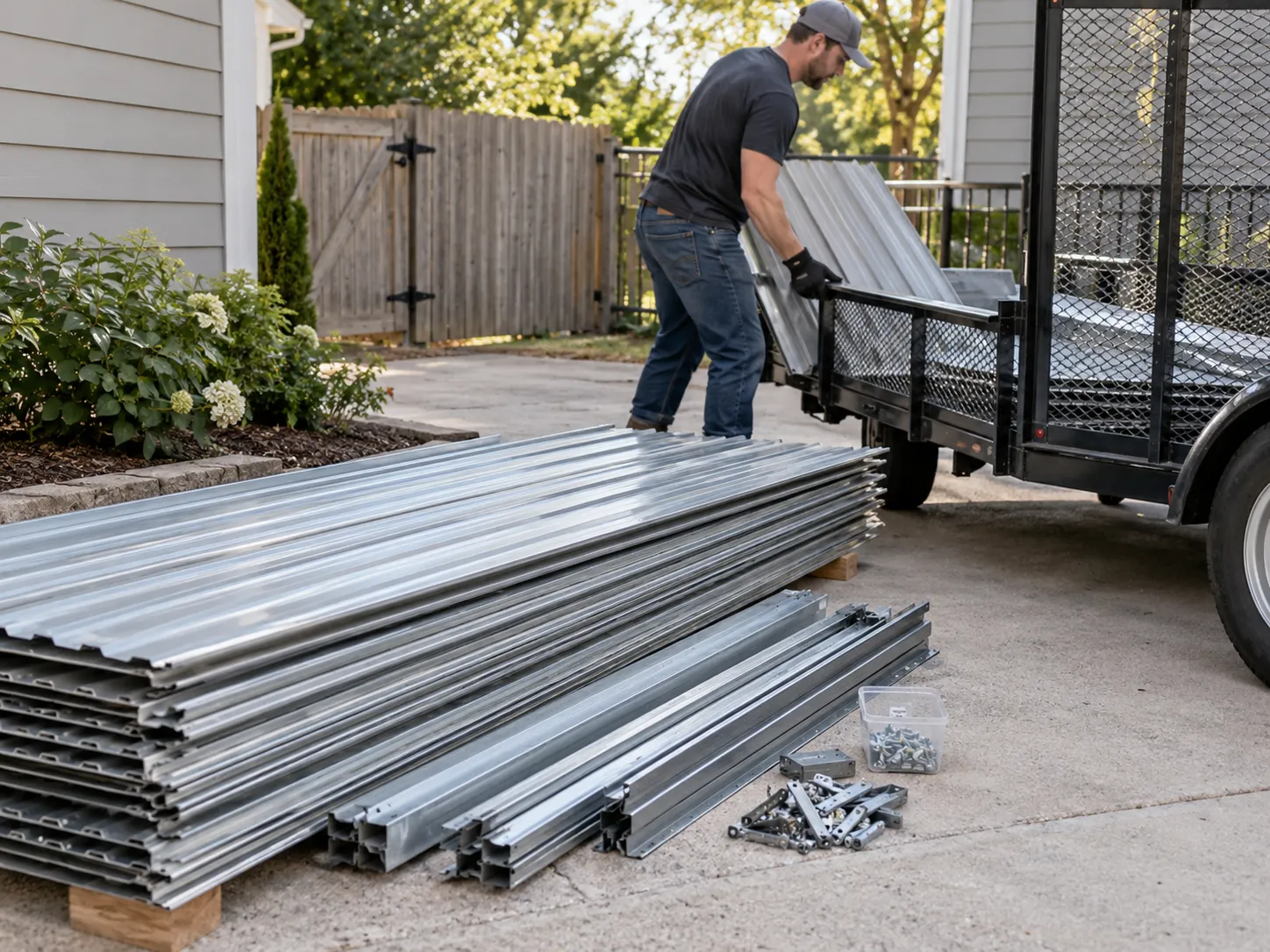
Estimate factors
A useful estimate reflects the actual site, not a one-size price. Include these details:
- Panel size and corrosion
- Frame stability
- Door and track configuration
- Anchors or floor platform
- Clear gate width
- Material sorting and load securement
Questions about metal shed removal
Can the panels be removed whole?
Sometimes, but panel condition, fasteners, bends, wind, and the access route determine whether whole-panel handling is sensible.
Are anchors included?
Only if they are identified and included in the approved scope. Buried or concrete-set anchors can require different work.
Is every metal shed recyclable?
Metal type, coatings, contamination, attached materials, and local facility rules affect the actual path. Recycling should not be guaranteed before those details are known.
How to Prepare a Metal Shed for Removal
A safe, useful preparation checklist for documenting a metal shed, its contents, panels, anchors, and backyard access.
Build the estimate around the real structure and route.
Photos of the structure, base, contents, and access route make the first conversation more useful.