Shed Debris Removal in Dayton, OH
A debris pile needs its own review. Volume, weight, sharp edges, buried pieces, access, and mixed materials can matter more than the shed’s old dimensions.
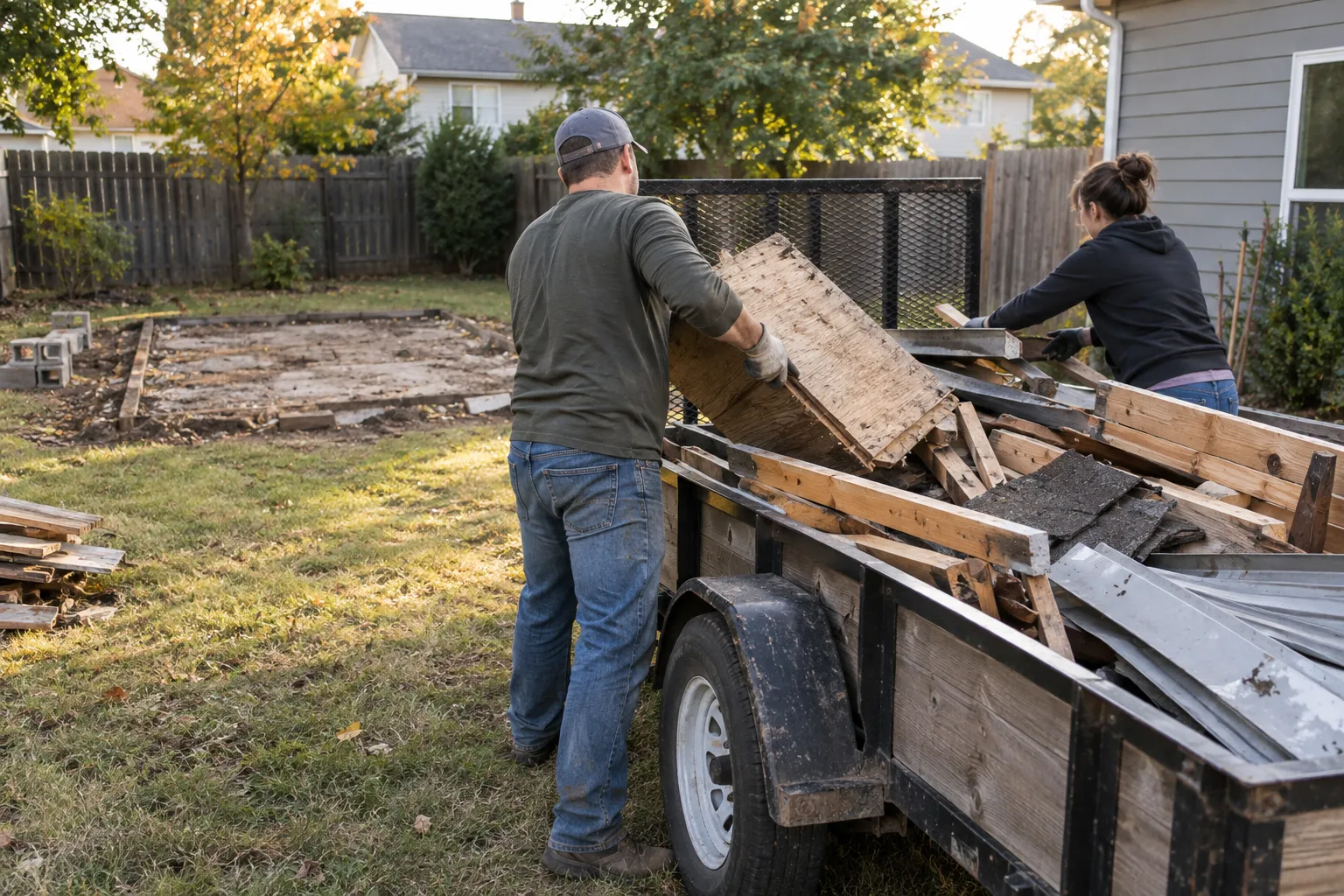

This service is for loose or stacked shed material. It does not assume active demolition, excavation, hazardous-material handling, or final grading.
What the conversation should cover
- Review of pile volume and material mix
- Access and loading plan
- Handling of approved wood, metal, and roofing debris
- Transport to an appropriate legal facility
- Loose-debris sweep of the agreed pickup area
Prepare without starting the risky work
- Keep glass, chemicals, fuel, batteries, and unknown containers separate and visible.
- Photograph the full pile and close views of the material mix.
- Do not hide sharp or heavy material beneath light debris.
- Keep the route to the pile clear and describe any soft ground or steps.
Estimate factors
A useful estimate reflects the actual site, not a one-size price. Include these details:
- Estimated volume
- Heavy roofing or foundation pieces
- Loose nails and sharp metal
- Mixed or excluded materials
- Carry distance and loading access
- Whether active teardown remains
Questions about shed debris removal
Can you take a shed someone else already demolished?
That is the purpose of this page, subject to review of the material, access, volume, and any excluded items.
Should I bag the debris?
Do not bag heavy or sharp material unless the handling method has been agreed. Clear photographs of sorted piles are more useful for review.
Does debris removal include the slab?
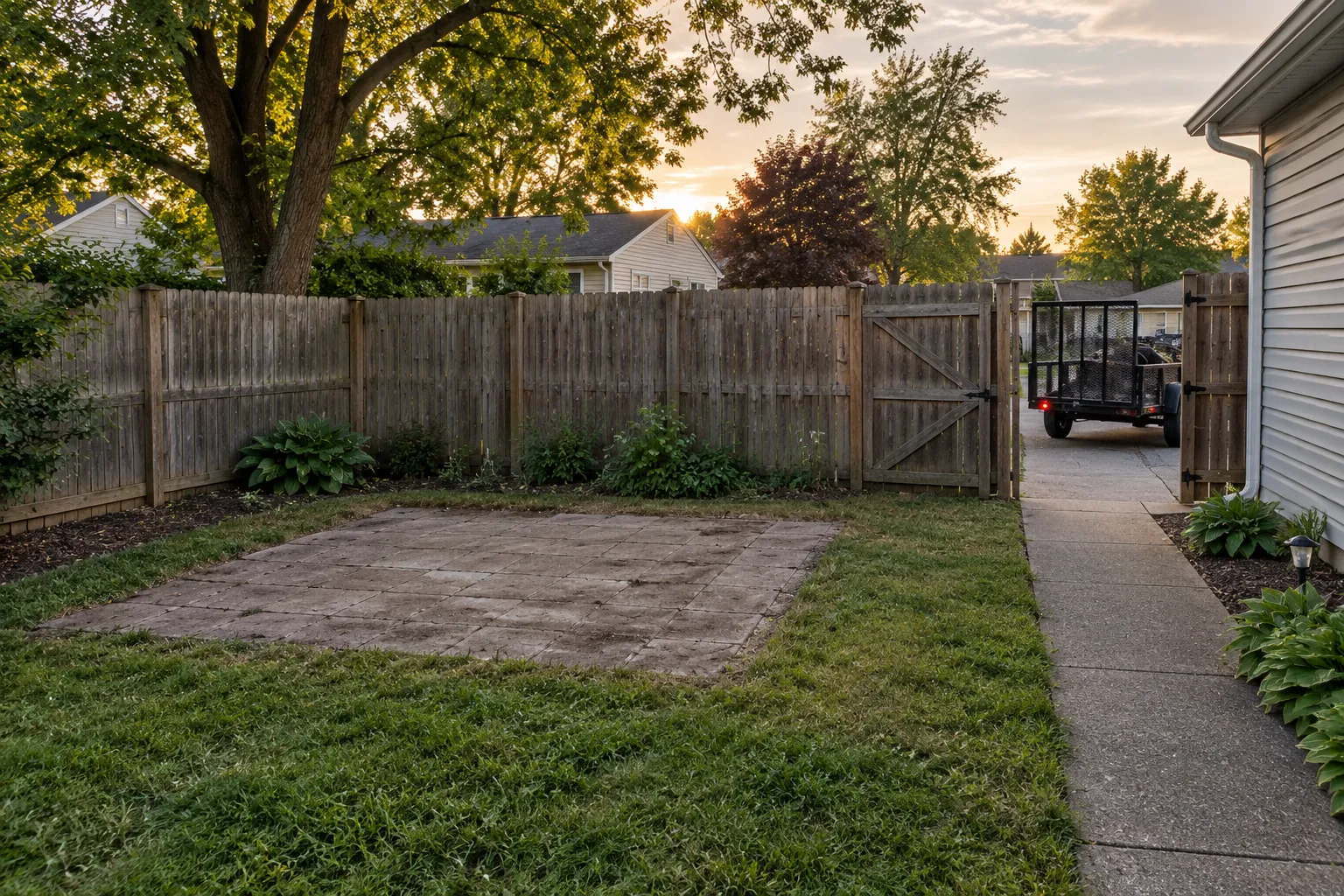
No. Concrete slabs, footings, anchors, excavation, and grading need separate evaluation and scope.
What Happens to Shed Debris and the Base After Removal?
Understand the difference between hauling shed debris, removing the floor or foundation, and restoring the former shed footprint.
Build the estimate around the real structure and route.
Photos of the structure, base, contents, and access route make the first conversation more useful.